

What to expect with ADCETRIS treatment
Working with your healthcare team and learning what to expect from treatment can help you feel more confident throughout your care

Before starting treatment
Tell your doctor about the following:
- All of your medical conditions
- Current medications, including supplements and vitamins, to avoid drug interactions
- If you are pregnant or plan to become pregnant, because ADCETRIS treatment may harm your unborn baby
- Female patients who are able to become pregnant should use effective birth control during treatment and for 2 months after their last ADCETRIS dose
- Male patients with female partners who can become pregnant should use effective birth control during treatment and for 4 months after their last ADCETRIS dose
- If you are breastfeeding: Don't breastfeed during treatment due to the risk to the baby
How is ADCETRIS plus lenalidomide and rituximab given?
ADCETRIS is an intravenous (IV) infusion
ADCETRIS and rituximab are both given as an IV infusion (directly into the vein), at the doctor’s office or clinic.
- Given every 3 weeks
- Takes about 30 minutes
- Rituximab will be given separately and may be offered as a subcutaneous injection
Your doctor may ask you to come to the office early to prepare and stay afterward for monitoring.
1× a day
Continuous treatments
Why it’s important to tell your doctor how you’re feeling during treatment
Your doctor may need to make adjustments to your treatment plan, delay administration of the next dose, or give a smaller dose of ADCETRIS until symptoms improve. In cases where side effects are severe, or do not improve, ADCETRIS may need to be stopped completely.
For more information about understanding side effects, download a copy of the ADCETRIS side effects guide
G-CSF will be given to help support your treatment
Don't stop, change, or delay your ADCETRIS plus AVD treatment unless directed by your doctor. Your doctor may take additional steps to help manage side effects.
Support for caregivers
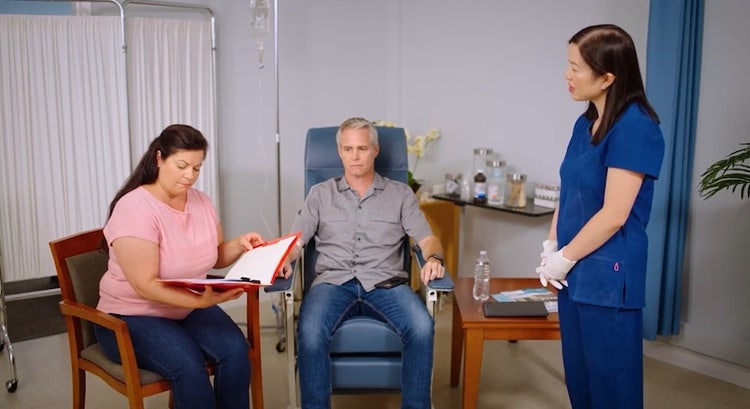
Video Transcript
Caring for a friend or a loved one who has lymphoma can be difficult. The good news is you are not alone, and there are ways you can help not just your loved one, but also yourself along this treatment journey. Caregivers can play many roles, and those roles will likely change depending on your loved one's needs. Some of the most basic ways to help provide care for your loved one during their treatment include giving support and encouragement, helping your loved one with their treatment reminders and appointments, helping with transportation for treatment, helping your loved one manage their symptoms and treatment-related side effects, helping to make meals and complete chores, helping with legal and financial matters, including bills, insurance, and medical documents.
One of the biggest things you can do as a caregiver is to gain knowledge about lymphoma. This includes learning everything you can about the disease, such as what it does in the body, how it may progress, common symptoms, treatment options, how the disease may respond to treatment, and even about expected side effects from treatment.
Consider creating a care file or binder where you can keep and organize all information on your loved one's condition, as well as prescription medications, treatment plans and appointments, medical documents, information on treatment-related side effects, financial and insurance information, and details on any hospital visits.
Bring this care file or binder to your loved one's appointments for quick reference and to add any information you feel will be helpful. If you know other caregivers who have been through a similar process or treatment journey, you may want to seek out any guidance they can provide.
Providing care can be stressful, so it's important to take time for yourself throughout your loved one's journey. Keeping organized, learning more about lymphoma, communicating effectively, helping your loved one with planning and treatment, and taking care of yourself are all part of your journey as a caregiver. And remember, caring for your loved one is about finding ways for you to work together.
Questions for your doctor, but unsure where to start?
Glossary
G-CSF: Granulocyte colony-stimulating factor, a medication that can help boost white blood cell count.
Neutropenia: Having low levels of a type of white blood cell called neutrophils that help your immune system. You could have a higher chance of getting an infection.