

How may I benefit from ADCETRIS?
Study design
An international, clinical study of 102 people evaluated the effectiveness and safety of ADCETRIS in patients with classical Hodgkin lymphoma that came back after stem cell transplant.
- 102 people were assigned to receive ADCETRIS every 3 weeks for up to 16 cycles
Researchers reviewed the overall response rate (primary endpoint) and the median duration of response (secondary endpoint) at approximately 1.5 years.
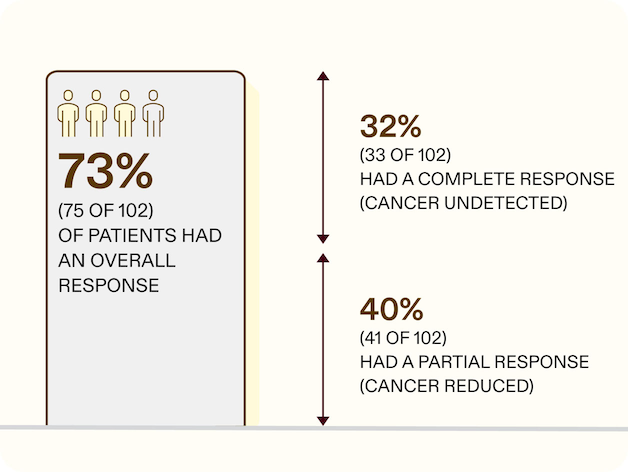
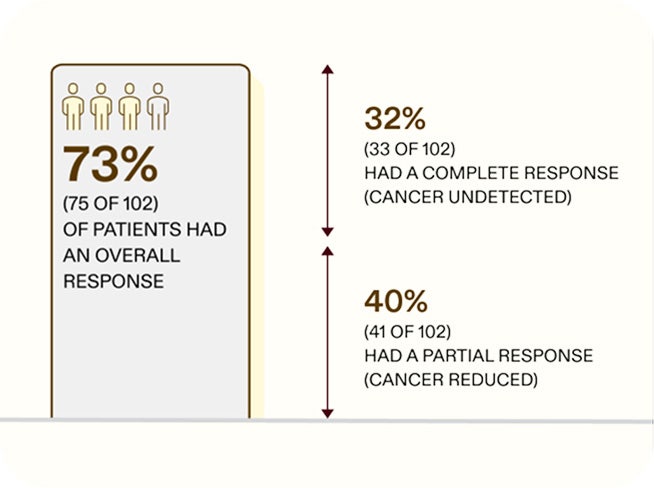
Overall response rate
At approximately 1.5 years, patients treated with ADCETRIS saw their classical Hodgkin lymphoma, which came back after a stem cell transplant, become reduced or undetectable.
Median duration of response
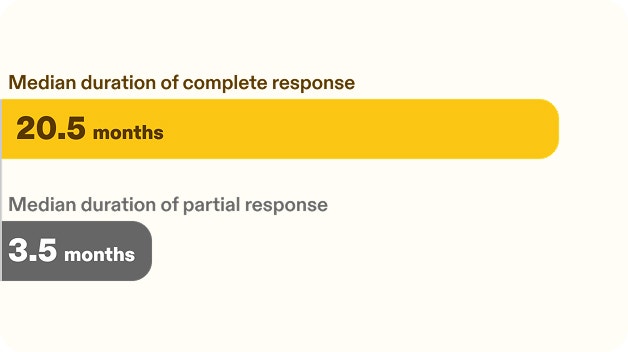
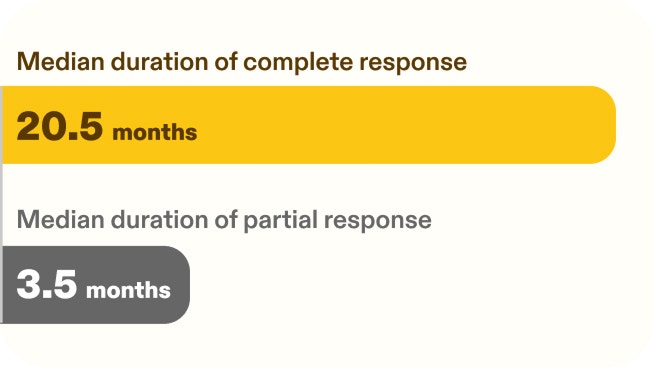
For patients who responded to treatment with ADCETRIS, the median duration of response was 6.7 months.
The most important serious safety information
PROGRESSIVE MULTIFOCAL LEUKOENCEPHALOPATHY (PML): Patients treated with ADCETRIS can have a rare, serious brain infection called PML that can lead to death.
Tell your doctor immediately if you have mood or behavior changes, confusion, problems in thinking or loss of memory, changes in vision, speech, or walking, or decreased strength or weakness on one side of the body. PML may also be caused by prior treatments or diseases that weakened your immune system.
Do not take ADCETRIS if you are receiving bleomycin due to pulmonary toxicity (serious lung problems).
Adcetris can cause other serious side effects including nerve damage, allergic and infusion reactions, blood problems, serious infections, tumor lysis syndrome (TLS), serious side effects for patients with severe kidney or moderate to severe liver disease, liver problems, lung problems, serious skin problems, gastrointestinal problems, high blood sugar (hypoglycemia) and fetal harm. Some of these cases resulted in death. Please see Important Safety Information below or Important Facts about ADCETRIS to learn more.
Most common side effects while taking ADCETRIS
The most common serious side effects in study patients were weakness in the hands or feet (peripheral motor neuropathy) (4%), stomach pain (3%), blood clots in the lungs (2%), inflamed lungs (2%), collapsed lung (2%), kidney infections (2%), and fever (2%).
For more information on serious side effects and other side effects, please see the Important Safety Information at the bottom of this page and read the Important Facts about ADCETRIS, including BOXED WARNING.
Tell your doctor about any side effect concerns you have
Don’t stop, change, or delay your ADCETRIS treatment unless directed by your doctor. Your doctor may take additional steps to help manage side effects, including:
- Reducing your ADCETRIS dosage, or delaying your next dose, until symptoms improve
- Stopping ADCETRIS completely if side effects are severe or do not improve
For more information about understanding side effects, download a copy of the ADCETRIS side effects guide
Learn more about what you can expect before starting ADCETRIS treatment.
Glossary
Median: The middle number in a list of numbers.
Overall response rate: The percentage of people in a study or treatment group who have a partial response or complete response to the treatment within a certain period of time. Measuring the overall response rate is one way to see how well a new treatment works.
Stem cell transplant: A procedure in which a patient receives healthy stem cells (blood-forming cells) to replace their own stem cells that have been destroyed by certain cancer treatments.