

How may I benefit from ADCETRIS?
AHOD1331 study design
AHOD1331 was a large clinical study of 600 children 2 years and older that compared the effectiveness and safety of ADCETRIS plus AVEPC with ABVEPC chemotherapy in patients with previously untreated classical Hodgkin lymphoma.
- 300 pediatric patients were assigned to receive ADCETRIS plus AVEPC every 3 weeks for up to 5 cycles
- 300 pediatric patients were assigned to receive ABVEPC chemotherapy every 3 weeks for up to 5 cycles
Patients ranged in age from 3 to 21 years; the median age was 15. High risk was defined as Ann Arbor Stage 2B with bulk disease, Stage 3B, Stage 4A, and Stage 4B. Researchers observed the event-free survival results (primary endpoint) at a median follow-up time of just over 3.5 years (42.1 months).
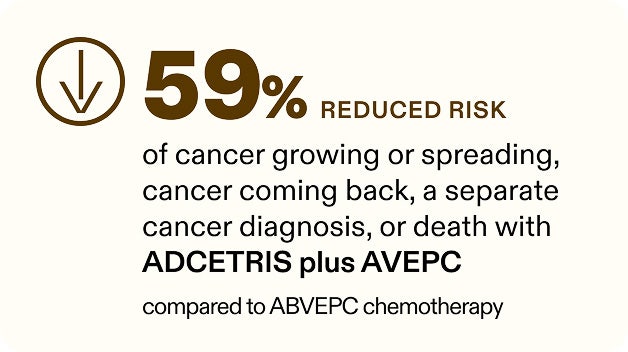
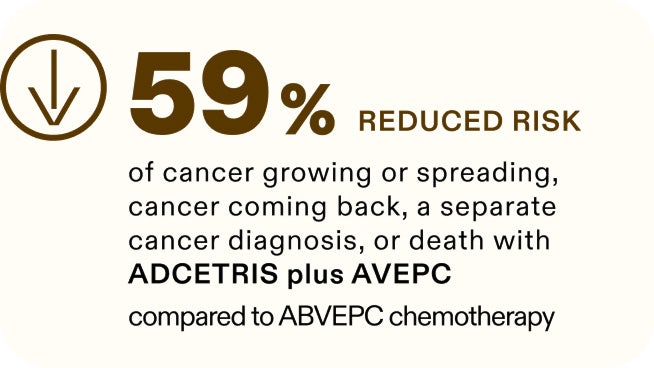
Event-free survival results
Approximately 3.5 years after enrolling in the study, more pediatric patients treated with ADCETRIS plus AVEPC did not have their cancer grow, spread, or come back, receive a separate cancer diagnosis, or die compared to ABVEPC chemotherapy.
The most important serious safety information
Do not take ADCETRIS if you are receiving bleomycin due to pulmonary toxicity (serious lung problems).
Adcetris can cause other serious side effects including nerve damage, allergic and infusion reactions, blood problems, serious infections, tumor lysis syndrome (TLS), serious side effects for patients with severe kidney or moderate to severe liver disease, liver problems, lung problems, serious skin problems, gastrointestinal problems, high blood sugar (hypoglycemia) and fetal harm. Some of these cases resulted in death. Please see Important Safety Information below or Important Facts about ADCETRIS to learn more.
Most common severe side effects while taking ADCETRIS plus AVEPC
Serious adverse reactions occurred in 22% of patients who received ADCETRIS plus AVEPC chemotherapy. The most common serious side effects were low blood pressure (3%) and significantly low numbers of white blood cells with a fever (3%)
For more information on serious side effects and other side effects, please see the Important Safety Information at the bottom of this page and read the Important Facts about ADCETRIS, including BOXED WARNING.
Tell your doctor about any side effect concerns you have
The doctor should prescribe granulocyte colony-stimulating factor (G-CSF) along with ADCETRIS treatment right at the start. G-CSF is a medication that may help reduce the chance of neutropenia (low white blood cell count).
Don’t stop, change, or delay ADCETRIS plus AVEPC treatment unless directed by your doctor. The doctor may take additional steps to help manage side effects, including:
- Reducing your ADCETRIS dosage, or delaying your next dose, until symptoms improve
- Stopping ADCETRIS completely if side effects are severe or do not improve
For more information about understanding side effects, download a copy of the ADCETRIS side effects guide
Learn more about what you can expect before starting ADCETRIS treatment.
Glossary
AVEPC: A combination of 5 chemotherapies—combination with doxorubicin, vincristine, etoposide, prednisone, and cyclophosphamide.
ABVEPC: A combination of 6 chemotherapies—combination with doxorubicin, bleomycin, vincristine, etoposide, prednisone, and cyclophosphamide.
Event-free survival: The length of time that the patient remains free of certain complications or events.
G-CSF: Granulocyte colony-stimulating factor, a medication that can help boost white blood cell count.
Median: The middle number in a list of numbers.