

Justin’s story: Being prepared matters
“My reaction was surprise, but what do we do to prepare for this…what’s the journey ahead?”
Video Transcript
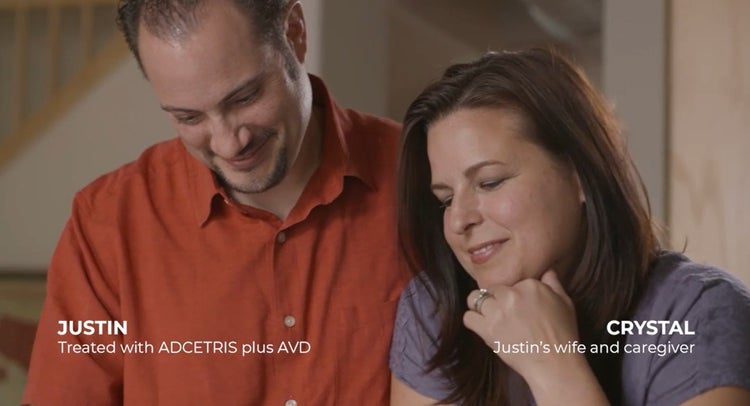
Hi, my name's Justin. I live in Northern California with my wife, Crystal, and our kids. Crystal and I have been married for almost nine years and together for almost 13.
Hi, I'm Crystal. I am Justin's wife. I am also his caregiver. The road to diagnosis was not simple. There was days where we weren't sure what the answer was ahead of us. There were many tests and procedures talked about. A lot of things up in the air.
It started with a cough that I couldn't get rid of. It progressed, a couple of times a day, I would just have this dry wheezing cough. I didn't feel sick. My buddy and I had been working out pretty extensively for about six months, and we were working out in his garage, so I thought maybe I was just picking up something from inside his garage where we had all the weight equipment and stuff, but it didn't go away. And it progressively started to get a little worse. After a while, maybe a month or so, I went to the doctor and said, “Hey, I don't feel sick, but I can't get rid of this cough.”
She prescribed some antibiotics. They didn't do anything. A couple of weeks later, I went back and she gave me a different antibiotic and had me do a chest X-ray. The chest X-ray showed I had pneumonia, which I was surprised because I didn't feel sick. So I took the antibiotics and another couple of weeks later, I finally did start to feel sick. This was coming up on Memorial Weekend. I called the doctor again. She had me do another chest X-ray and then come in to see her.
The chest X-ray showed the pneumonia was worse this time, and she said I needed to try a different type of antibiotic. So I left with a new prescription. On the way home, she called me and said she'd conferred with a colleague and that with Memorial Weekend coming up, I needed to have several other tests run. She was sending my paperwork over to a hospital. So I went home and discussed it with Crystal and decided, yeah, the hospital is probably what we need to do. And so we took the drive over.
I thought, thank God, we're finally going to go get some help.
At some point, my memory becomes fuzzy from this point on, but they admitted me, said, “yes, you have a very bad pneumonia, and it looks like you have something else going on. We need to figure out what it is.”
So they ran tests, found out I had a large pleural effusion in my back, and they said they needed to drain it. They brought a surgeon in who said he wanted to do a bronchoscopy on me and basically put a camera down my throat to see what was going on inside my chest. So we did that. The surgeon told me that they needed to do a follow-up one and biopsy that mass to find out what it was. The biopsy, they tested four areas. Three of the four came back testing positive for classical Hodgkin lymphoma.
So when we met with the oncologist, he came bursting into the room full of confidence. He sat down, introduced himself, said, “Hi, I know what's wrong with you. You have Hodgkin lymphoma, and we've got some work to do.” The oncologist set us up with a bunch of tests that we had to do, including a PET scan, and the result of the PET scan came back with stage 4 Hodgkin lymphoma.
My reaction was surprise, but, what do we do to prepare for this? Where do we go? What's the journey ahead? What's my role? And being the caregiver and a mom and his wife, I immediately started organizing in my head about how to keep all these details that we're about to learn organized.
Justin was treated with ADCETRIS (brentuximab vedotin) plus AVD (Adriamycin, vinblastine, and dacarbazine).
ADCETRIS plus AVD is a prescription therapy approved for adults with previously untreated stage 3 or 4 classical Hodgkin lymphoma.
ADCETRIS will not work for everyone. Individual results may vary. The information provided is for educational purposes only and is not intended to replace discussions with a health care provider. Ask your doctor if ADCETRIS plus AVD is right for you.
Continue watching to review the Important Safety Information and read Important Facts, including BOXED WARNING at www.ADCETRIS.com.
Important Safety Information
- What is the most important serious safety information I should know about ADCETRIS?
- Progressive Multifocal Leukoencephalopathy (PML): Patients treated with ADCETRIS can have a rare, serious brain infection, called PML that can lead to death. Tell your doctor immediately if you have mood or behavior changes, confusion, problems in thinking or loss of memory, changes in vision, speech or walking, or decreased strength or weakness on one side of the body. PML may also be caused by prior treatments or diseases that weakened your immune system.
- Do not take ADCETRIS if you are receiving bleomycin.
What are the other possible serious side effects of ADCETRIS?
- Nerve damage (peripheral neuropathy). Tell your doctor if you have any numbness or tingling in your hands or feet or any muscle weakness.
- Allergic and infusion reactions. Tell your doctor if you experience symptoms of fever, chills, rash, or breathing problems within 24 hours of infusion. If you have a reaction, you may be given medicines before your ADCETRIS treatment.
- Blood problems. Serious cases, including death, of fever with a low number of white blood cells, have occurred with ADCETRIS. Serious cases of a low number of white blood cells, a low number of platelets, or a low number of red blood cells can occur.
Your doctor will do blood tests to check your blood cell levels during ADCETRIS treatment. Your doctor may give you a medicine called G-CSF. Tell your doctor if you have a fever of 100.5 degrees Fahrenheit or higher, chills, cough, or pain when you urinate.
- Infections caused by bacteria, fungi, or viruses have been reported.
- Tumor lysis syndrome is caused by the fast breakdown of cancer cells. Your doctor will monitor you for symptoms.
- Patients with severe kidney disease or moderate or severe liver disease may have more side effects and deaths than patients without kidney or liver problems.
- Liver problems. Serious liver problems, including death, can occur. Tell your doctor if you feel tired, do not feel like eating, have upper stomach pain, dark urine, or yellow skin and eyes (jaundice).
- Lung problems. Serious lung problems, including death, can occur. Tell your doctor If you have a new cough, a cough that gets worse or feel out of breath.
- Skin problems called Stevens-Johnson syndrome and toxic epidermal necrolysis can happen. Tell your doctor if you have rash, hives, sores in your mouth or blistering or peeling skin.
- Gastrointestinal (GI) problems. Serious cases, including death, related to the pancreas, stomach, intestine, and colon, can happen. If you have lymphoma that involves your stomach or intestine, you could have a higher risk of GI problems. Tell your doctor if you have severe stomach pain, chills, fever, nausea, vomiting, or diarrhea.
- High blood sugar. Your doctor will test your blood during ADCETRIS treatment. Tell your doctor if you need to urinate more often than usual, are very thirsty, or have blurry vision.
The most common side effects (greater than or equal to 20%) in adult patients who received ADCETRIS are:
- nerve damage (peripheral neuropathy)
- nausea
- feeling tired
- muscle pain
- constipation
- diarrhea
- vomiting
- fever
- infection in the nose or sinuses
- sores or swelling in the mouth and/or in the digestive tract
- upper stomach pain
- rash
The most common laboratory abnormalities (greater than or equal to 20%) in adult patients who received ADCETRIS are:
- a decrease in white blood cells
- an increase in creatinine
- a decrease in hemoglobin
- an increase in blood sugars
- an increase in alanine aminotransferase (ALT)
- an increase in aspartate aminotransferase (AST)
The most common severe side effects (greater than or equal to 5%) in pediatric patients who received ADCETRIS are:
- a low number with white blood cells
- a low number of red blood cells
- a low number of platelets
- fever with a low number of white blood cells
- sores or swelling in the mouth
- infection
These are not all the possible side effects of ADCETRIS. Tell your doctor about any side effect that bothers you or does not go away. If you have certain side effects, your doctor may lower your dose, delay, or stop your ADCETRIS treatment.
What should I tell my doctor before I start treatment with ADCETRIS?
- All your medical conditions, including if you have kidney, liver, or lung problems, an infection, or diabetes.
- If you are pregnant or plan to become pregnant. ADCETRIS may harm your unborn baby. Females who are able to become pregnant: your doctor should give you a pregnancy test before starting ADCETRIS treatment. You should use effective birth control during ADCETRIS treatment and for two months after your last dose of ADCETRIS. Tell your doctor right away if you become pregnant or think you are pregnant during ADCETRIS treatment.
- Men with female partners who can get pregnant should use effective birth control during ADCETRIS treatment and for four months after the last dose.
- If you are breastfeeding or plan to breastfeed. Do not breastfeed during ADCETRIS treatment.
- All the medicines you take, including prescription and over-the-counter medicines, vitamins, and herbal supplements. ADCETRIS and certain other medicines can affect each other.
You are encouraged to report negative side effects of prescription drugs to the FDA. Visit www. fda.gov/Safety/MedWatch or call 1-800 FDA-1088.
Please see important facts about ADCETRIS, including BOXED WARNING.
Video Transcript
My oncologist gave us several instructions in order to prepare for treatment. One of the most important was to drink a lot of water and throughout the whole process of treatment, just to continue drinking water as much as you could and staying hydrated. He also gave us a list of prescriptions to pick up, along with a bunch of other over-the-counter medications. My doctor ordered a series of tests for me to undergo. I did a PET scan, a breathing test, a heart stress test, and a MUGA test. My experience for port installation was: It was an early morning appointment at the hospital. My father had taken me to have it done since Crystal wasn't available that day. We checked in, filled out some paperwork, changed into a hospital gown and was wheeled down to the surgical area. I met with a doctor and a couple of nurses who explained anesthesia and how the process was going to go. I was then taken into the room. They asked me what music I wanted to hear, and they started the procedure. A blue tarp was put over my face so I couldn't see what was going on. The surgeon who came in to do it asked me to tell him the story of how we ended up in this situation.
And by the time I finished telling him, he said, “Okay, I'm done.” I had to take it easy for a few days as the wound area healed. The port wasn't difficult to manage, but it was uncomfortable. My mother-in-law had made a port pillow to go over a seat belt for me. I never really got used to it being there. We learned that everyone's treatment journey is different and that you should definitely talk to your doctor about anything that you might be experiencing or any questions or concerns you may have.
Treatment days for us, they started the night before because we were rallying for that next morning. I usually had to go to work the day of, and I would leave work early, pick up Justin, and visit with the doctor real quick. And then we were driving across the parking lot, find a shady tree, and hop out, say a quick prayer, and take a picture of ourselves. And then we walked into the infusion center, and we were greeted by friendly faces.
The nurses at the infusion center were all very kind. I was first given a pre-treatment arrangement of medicines, and I would fall asleep almost immediately afterwards. Crystal took care of the rest for me the entire time. She made sure I was comfortable putting slippers on my feet and covering me in blankets. And then she would answer the nurses' questions. They would check in with her, and she would just be there for me in any way I possibly needed to. She's my hero here. I spent a lot of time sleeping and just being focused on recovery, letting my body go through the side effects and handle them as best as I could. When something new presented itself, Crystal would write it down and she would inquire as the best possible way to help me through it, talk to the doctors and the counselors and the nurse navigators, everyone that we had on our side. She was my advocate.
When we would come home, we would make sure his water was filled or he had hot tea. If he was hungry, we made him something to eat, but most of the time he didn't want to eat, so we made food for him anyway. Our little one would bring a tray of breakfast to him in the morning with all his medication for that morning. And then we'd leave him alone. We would just check on him various times throughout the day and just try to let him rest.
I learned about the treatment process and how to manage the side effects, mostly through the nurses at our infusion center. Our oncologist and the second opinion oncologist I saw, they helped a lot, too. But we saw the nurses and spent the most time with the nurses at the infusion center. Usually, while I was asleep and she was talking to them, she was able to run by any questions she could think of, and they were full of a lot of really good advice.
Justin was treated with ADCETRIS (brentuximab vedotin) plus AVD (Adriamycin, vinblastine, and dacarbazine).
ADCETRIS plus AVD is a prescription therapy approved for adults with previously untreated stage 3 or 4 classical Hodgkin lymphoma.
ADCETRIS will not work for everyone. Individual results may vary. The information provided is for educational purposes only and is not intended to replace discussions with a health care provider. Ask your doctor if ADCETRIS plus AVD is right for you.
Continue watching to review the Important Safety Information and read Important Facts, including BOXED WARNING at www.ADCETRIS.com.
Important Safety Information
- What is the most important serious safety information I should know about ADCETRIS?
- Progressive Multifocal Leukoencephalopathy (PML): Patients treated with ADCETRIS can have a rare, serious brain infection, called PML that can lead to death. Tell your doctor immediately if you have mood or behavior changes, confusion, problems in thinking or loss of memory, changes in vision, speech or walking, or decreased strength or weakness on one side of the body. PML may also be caused by prior treatments or diseases that weakened your immune system.
- Do not take ADCETRIS if you are receiving bleomycin.
What are the other possible serious side effects of ADCETRIS?
- Nerve damage (peripheral neuropathy). Tell your doctor if you have any numbness or tingling in your hands or feet or any muscle weakness.
- Allergic and infusion reactions. Tell your doctor if you experience symptoms of fever, chills, rash, or breathing problems within 24 hours of infusion. If you have a reaction, you may be given medicines before your ADCETRIS treatment.
- Blood problems. Serious cases, including death, of fever with a low number of white blood cells, have occurred with ADCETRIS. Serious cases of a low number of white blood cells, a low number of platelets, or a low number of red blood cells can occur.
Your doctor will do blood tests to check your blood cell levels during ADCETRIS treatment. Your doctor may give you a medicine called G-CSF. Tell your doctor if you have a fever of 100.5 degrees Fahrenheit or higher, chills, cough, or pain when you urinate.
- Infections caused by bacteria, fungi, or viruses have been reported.
- Tumor lysis syndrome is caused by the fast breakdown of cancer cells. Your doctor will monitor you for symptoms.
- Patients with severe kidney disease or moderate or severe liver disease may have more side effects and deaths than patients without kidney or liver problems.
- Liver problems. Serious liver problems, including death, can occur. Tell your doctor if you feel tired, do not feel like eating, have upper stomach pain, dark urine, or yellow skin and eyes (jaundice).
- Lung problems. Serious lung problems, including death, can occur. Tell your doctor If you have a new cough, a cough that gets worse or feel out of breath.
- Skin problems called Stevens-Johnson syndrome and toxic epidermal necrolysis can happen. Tell your doctor if you have rash, hives, sores in your mouth or blistering or peeling skin.
- Gastrointestinal (GI) problems. Serious cases, including death, related to the pancreas, stomach, intestine, and colon, can happen. If you have lymphoma that involves your stomach or intestine, you could have a higher risk of GI problems. Tell your doctor if you have severe stomach pain, chills, fever, nausea, vomiting, or diarrhea.
- High blood sugar. Your doctor will test your blood during ADCETRIS treatment. Tell your doctor if you need to urinate more often than usual, are very thirsty, or have blurry vision.
The most common side effects (greater than or equal to 20%) in adult patients who received ADCETRIS are:
- nerve damage (peripheral neuropathy)
- nausea
- feeling tired
- muscle pain
- constipation
- diarrhea
- vomiting
- fever
- infection in the nose or sinuses
- sores or swelling in the mouth and/or in the digestive tract
- upper stomach pain
- rash
The most common laboratory abnormalities (greater than or equal to 20%) in adult patients who received ADCETRIS are:
- a decrease in white blood cells
- an increase in creatinine
- a decrease in hemoglobin
- an increase in blood sugars
- an increase in alanine aminotransferase (ALT)
- an increase in aspartate aminotransferase (AST)
The most common severe side effects (greater than or equal to 5%) in pediatric patients who received ADCETRIS are:
- a low number with white blood cells
- a low number of red blood cells
- a low number of platelets
- fever with a low number of white blood cells
- sores or swelling in the mouth
- infection
These are not all the possible side effects of ADCETRIS. Tell your doctor about any side effect that bothers you or does not go away. If you have certain side effects, your doctor may lower your dose, delay, or stop your ADCETRIS treatment.
What should I tell my doctor before I start treatment with ADCETRIS?
- All your medical conditions, including if you have kidney, liver, or lung problems, an infection, or diabetes.
- If you are pregnant or plan to become pregnant. ADCETRIS may harm your unborn baby. Females who are able to become pregnant: your doctor should give you a pregnancy test before starting ADCETRIS treatment. You should use effective birth control during ADCETRIS treatment and for two months after your last dose of ADCETRIS. Tell your doctor right away if you become pregnant or think you are pregnant during ADCETRIS treatment.
- Men with female partners who can get pregnant should use effective birth control during ADCETRIS treatment and for four months after the last dose.
- If you are breastfeeding or plan to breastfeed. Do not breastfeed during ADCETRIS treatment.
- All the medicines you take, including prescription and over-the-counter medicines, vitamins, and herbal supplements. ADCETRIS and certain other medicines can affect each other.
You are encouraged to report negative side effects of prescription drugs to the FDA. Visit www. fda.gov/Safety/MedWatch or call 1-800 FDA-1088.
Please see important facts about ADCETRIS, including BOXED WARNING.

Video Transcript
My role during Justin's doctor visits were to be his advocate, his caregiver, a support system, to be a best friend and a confidante. The way that I helped Justin manage his schedule and his medications, we kept a binder together that included his list of prescriptions, ER visits, his treatment plans. I also laid out all of his medicines for him throughout the day and ensured to get those for him throughout the day. And whenever we needed to go to a doctor appointment or to the hospital, we brought our binder with us to help refer to previous notes or just for reference. And we use that binder all the time.
The kids were involved from the beginning. We’re a tight family, and it was easy for them to find a place where they could be helpful, but mostly each one of them took a different role. Our oldest, who is a medical student, enjoyed the medical part of this process. She would help Justin do his post-treatment shots, and our middle child would go in during the day and check on Justin, see if he needed some water. Our littlest one enjoyed having breakfast in bed with her daddy and just spending time, but we tried to keep the house quiet and tried to include him with what we could.
The biggest misconception I had on side effects was that I'd be able to handle it on my own, and I found out very quickly that that wasn't the case. And it took several conversations with my oncologist and the second opinion doctor that we saw to get us squared away for the journey that we were going to be on and get us the help that we needed. I helped Justin cope through these side effects just by trying to understand where they were coming from. Is it something I could help with him during that process? Was there a time I needed to reach out further for more help than I could give him? I started having conversations with friends who had gone through treatment, and through other people that could offer their help and support.
Justin was treated with ADCETRIS (brentuximab vedotin) plus AVD (Adriamycin, vinblastine, and dacarbazine).
ADCETRIS plus AVD is a prescription therapy approved for adults with previously untreated stage 3 or 4 classical Hodgkin lymphoma.
ADCETRIS will not work for everyone. Individual results may vary. The information provided is for educational purposes only and is not intended to replace discussions with a health care provider. Ask your doctor if ADCETRIS plus AVD is right for you.
Continue watching to review the Important Safety Information and read Important Facts, including BOXED WARNING at www.ADCETRIS.com.
Important Safety Information
- What is the most important serious safety information I should know about ADCETRIS?
- Progressive Multifocal Leukoencephalopathy (PML): Patients treated with ADCETRIS can have a rare, serious brain infection, called PML that can lead to death. Tell your doctor immediately if you have mood or behavior changes, confusion, problems in thinking or loss of memory, changes in vision, speech or walking, or decreased strength or weakness on one side of the body. PML may also be caused by prior treatments or diseases that weakened your immune system.
- Do not take ADCETRIS if you are receiving bleomycin.
What are the other possible serious side effects of ADCETRIS?
- Nerve damage (peripheral neuropathy). Tell your doctor if you have any numbness or tingling in your hands or feet or any muscle weakness.
- Allergic and infusion reactions. Tell your doctor if you experience symptoms of fever, chills, rash, or breathing problems within 24 hours of infusion. If you have a reaction, you may be given medicines before your ADCETRIS treatment.
- Blood problems. Serious cases, including death, of fever with a low number of white blood cells, have occurred with ADCETRIS. Serious cases of a low number of white blood cells, a low number of platelets, or a low number of red blood cells can occur.
Your doctor will do blood tests to check your blood cell levels during ADCETRIS treatment. Your doctor may give you a medicine called G-CSF. Tell your doctor if you have a fever of 100.5 degrees Fahrenheit or higher, chills, cough, or pain when you urinate.
- Infections caused by bacteria, fungi, or viruses have been reported.
- Tumor lysis syndrome is caused by the fast breakdown of cancer cells. Your doctor will monitor you for symptoms.
- Patients with severe kidney disease or moderate or severe liver disease may have more side effects and deaths than patients without kidney or liver problems.
- Liver problems. Serious liver problems, including death, can occur. Tell your doctor if you feel tired, do not feel like eating, have upper stomach pain, dark urine, or yellow skin and eyes (jaundice).
- Lung problems. Serious lung problems, including death, can occur. Tell your doctor If you have a new cough, a cough that gets worse or feel out of breath.
- Skin problems called Stevens-Johnson syndrome and toxic epidermal necrolysis can happen. Tell your doctor if you have rash, hives, sores in your mouth or blistering or peeling skin.
- Gastrointestinal (GI) problems. Serious cases, including death, related to the pancreas, stomach, intestine, and colon, can happen. If you have lymphoma that involves your stomach or intestine, you could have a higher risk of GI problems. Tell your doctor if you have severe stomach pain, chills, fever, nausea, vomiting, or diarrhea.
- High blood sugar. Your doctor will test your blood during ADCETRIS treatment. Tell your doctor if you need to urinate more often than usual, are very thirsty, or have blurry vision.
The most common side effects (greater than or equal to 20%) in adult patients who received ADCETRIS are:
- nerve damage (peripheral neuropathy)
- nausea
- feeling tired
- muscle pain
- constipation
- diarrhea
- vomiting
- fever
- infection in the nose or sinuses
- sores or swelling in the mouth and/or in the digestive tract
- upper stomach pain
- rash
The most common laboratory abnormalities (greater than or equal to 20%) in adult patients who received ADCETRIS are:
- a decrease in white blood cells
- an increase in creatinine
- a decrease in hemoglobin
- an increase in blood sugars
- an increase in alanine aminotransferase (ALT)
- an increase in aspartate aminotransferase (AST)
The most common severe side effects (greater than or equal to 5%) in pediatric patients who received ADCETRIS are:
- a low number with white blood cells
- a low number of red blood cells
- a low number of platelets
- fever with a low number of white blood cells
- sores or swelling in the mouth
- infection
These are not all the possible side effects of ADCETRIS. Tell your doctor about any side effect that bothers you or does not go away. If you have certain side effects, your doctor may lower your dose, delay, or stop your ADCETRIS treatment.
What should I tell my doctor before I start treatment with ADCETRIS?
- All your medical conditions, including if you have kidney, liver, or lung problems, an infection, or diabetes.
- If you are pregnant or plan to become pregnant. ADCETRIS may harm your unborn baby. Females who are able to become pregnant: your doctor should give you a pregnancy test before starting ADCETRIS treatment. You should use effective birth control during ADCETRIS treatment and for two months after your last dose of ADCETRIS. Tell your doctor right away if you become pregnant or think you are pregnant during ADCETRIS treatment.
- Men with female partners who can get pregnant should use effective birth control during ADCETRIS treatment and for four months after the last dose.
- If you are breastfeeding or plan to breastfeed. Do not breastfeed during ADCETRIS treatment.
- All the medicines you take, including prescription and over-the-counter medicines, vitamins, and herbal supplements. ADCETRIS and certain other medicines can affect each other.
You are encouraged to report negative side effects of prescription drugs to the FDA. Visit www. fda.gov/Safety/MedWatch or call 1-800 FDA-1088.
Please see important facts about ADCETRIS, including BOXED WARNING.
More ADCETRIS stories


Brandon’s story: Staying positive matters


Mary Ann’s story: Being informed matters