

Brandon’s story: Staying positive matters
“My own research and curiosity empowered me to ask questions, leading me to seek a second opinion.”

Video Transcript
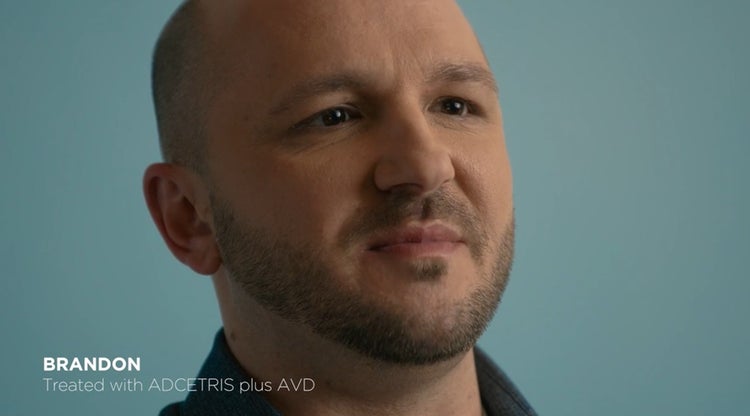
My name is Brandon. I was born and raised in Hazleton, Pennsylvania. After college, I started an internship in human resources at a company where my father worked. Fourteen years later, I'm still here. Currently, I'm the supply chain manager for the plant. I first recognized that something was wrong when I noticed I had swollen glands and some lower back pain. It was a busy time. I was working 12 to 16 hour days, but the back pain was what I noticed most. I remember feeling a little bit off, unmotivated, tired, and just overall, something didn't feel right. A couple of my friends were home to visit for the holidays. I went out to dinner one night with them right before Christmas, and I remember I drove there, and it was very cold out, and I just did not want to get out of the car. I forced myself to get out of the car. I went in, had dinner with my friends, and then it was the dreaded walk back to the car afterwards because my whole body felt cold and sore in a sense. After that night, I went back home. I went online. I was like, let me see what some of these symptoms are and what it could be.
Did my research. I watched videos online. The next morning, I woke up and I was like, All right, this is the worst I've felt in a long time, and I went to the doctor and I told him, I said, I think I have lymphoma. So he said, I don't think you have that. How's your diet, your exercise, your work schedule, your routine? I asked the doctor for additional tests, and sure enough, when the test came back, I was referred to a local oncologist, and it did not go well. It was very hard to follow and understand what he was saying. I also wasn't getting the answers I needed. After that initial visit was really the time I knew that I had to really kind of stick up for myself and advocate for myself. Something in my gut was just telling me that I needed that second opinion and to seek that. I remember leaving that appointment. I called my family doctor. I called my mom and I was like, I kind of want to get a second opinion. I want to get referred out of this doctor. I just don't feel that this is the right doctor for me. He put a call into another oncologist in Philadelphia and got me an appointment the following week.
I met with the oncologist as well as the nurse practitioner that worked with me throughout my treatment. They were very thorough and took the time to answer all my questions. Within a week of meeting my new care team, I had several tests, including a biopsy, and was diagnosed with stage 4 classical Hodgkin lymphoma. With the research I'd done and the support I felt for my new care team, I knew I was in a good spot mentally. I watched a lot of online videos, so I knew what I was going to have to deal with. I remember walking through a store and they had a shirt that said, Make this shot look easy. I bought that T-shirt and thought, This is going to be my motto through my classical Hodgkin lymphoma journey. I just really made a decision in the beginning that I had to just really remain positive and unbothered by it. I'm grateful that I didn't allow my initial experience with my first oncologist to get me down. My own research and curiosity empowered me to ask questions leading me to seek a second opinion. I would say if you have stage three or four Hodgkin lymphoma, the most important thing you could do is really research, look into your options, discuss the treatment plans with your doctor, and ultimately do what feels right for yourself.
Brandon was treated with ADCETRIS (brentuximab vedotin) plus AVD (Adriamycin, vinblastine, and dacarbazine).
ADCETRIS plus AVD is a prescription therapy approved for adults with previously untreated stage 3 or 4 classical Hodgkin lymphoma.
ADCETRIS will not work for everyone. Individual results may vary. The information provided is for educational purposes only and is not intended to replace discussions with a health care provider. Ask your doctor if ADCETRIS plus AVD is right for you.
Continue watching to review the Important Safety Information and read Important Facts, including BOXED WARNING at www.ADCETRIS.com.
Important Safety Information
- What is the most important serious safety information I should know about ADCETRIS?
- Progressive Multifocal Leukoencephalopathy (PML): Patients treated with ADCETRIS can have a rare, serious brain infection, called PML that can lead to death. Tell your doctor immediately if you have mood or behavior changes, confusion, problems in thinking or loss of memory, changes in vision, speech or walking, or decreased strength or weakness on one side of the body. PML may also be caused by prior treatments or diseases that weakened your immune system.
- Do not take ADCETRIS if you are receiving bleomycin.
What are the other possible serious side effects of ADCETRIS?
- Nerve damage (peripheral neuropathy). Tell your doctor if you have any numbness or tingling in your hands or feet or any muscle weakness.
- Allergic and infusion reactions. Tell your doctor if you experience symptoms of fever, chills, rash, or breathing problems within 24 hours of infusion. If you have a reaction, you may be given medicines before your ADCETRIS treatment.
- Blood problems. Serious cases, including death, of fever with a low number of white blood cells, have occurred with ADCETRIS. Serious cases of a low number of white blood cells, a low number of platelets, or a low number of red blood cells can occur. Your doctor will do blood tests to check your blood cell levels during ADCETRIS treatment. Your doctor may give you a medicine called G-CSF. Tell your doctor if you have a fever of 100.5 degrees Fahrenheit or higher, chills, cough, or pain when you urinate.
- Infections caused by bacteria, fungi, or viruses have been reported.
- Tumor lysis syndrome is caused by the fast breakdown of cancer cells. Your doctor will monitor you for symptoms.
- Patients with severe kidney disease or moderate or severe liver disease may have more side effects and deaths than patients without kidney or liver problems.
- Liver problems. Serious liver problems, including death, can occur. Tell your doctor if you feel tired, do not feel like eating, have upper stomach pain, dark urine, or yellow skin and eyes (jaundice).
- Lung problems. Serious lung problems, including death, can occur. Tell your doctor If you have a new cough, a cough that gets worse or feel out of breath.
- Skin problems called Stevens-Johnson syndrome and toxic epidermal necrolysis can happen. Tell your doctor if you have rash, hives, sores in your mouth or blistering or peeling skin.
- Gastrointestinal (GI) problems. Serious cases, including death, related to the pancreas, stomach, intestine, and colon, can happen. If you have lymphoma that involves your stomach or intestine, you could have a higher risk of GI problems. Tell your doctor if you have severe stomach pain, chills, fever, nausea, vomiting, or diarrhea.
- High blood sugar. Your doctor will test your blood during ADCETRIS treatment. Tell your doctor if you need to urinate more often than usual, are very thirsty, or have blurry vision.
The most common side effects (greater than or equal to 20%) in adult patients who received ADCETRIS are:
- nerve damage (peripheral neuropathy)
- nausea
- feeling tired
- muscle pain
- constipation
- diarrhea
- vomiting
- fever
- infection in the nose or sinuses
- sores or swelling in the mouth and/or in the digestive tract
- upper stomach pain
- rash
The most common laboratory abnormalities (greater than or equal to 20%) in adult patients who received ADCETRIS are:
- a decrease in white blood cells
- an increase in creatinine
- a decrease in hemoglobin
- an increase in blood sugars
- an increase in alanine aminotransferase (ALT)
- an increase in aspartate aminotransferase (AST)
The most common severe side effects (greater than or equal to 5%) in pediatric patients who received ADCETRIS are:
- a low number with white blood cells
- a low number of red blood cells
- a low number of platelets
- fever with a low number of white blood cells
- sores or swelling in the mouth
- infection
These are not all the possible side effects of ADCETRIS. Tell your doctor about any side effect that bothers you or does not go away. If you have certain side effects, your doctor may lower your dose, delay, or stop your ADCETRIS treatment.
What should I tell my doctor before I start treatment with ADCETRIS?
- All your medical conditions, including if you have kidney, liver, or lung problems, an infection, or diabetes.
- If you are pregnant or plan to become pregnant. ADCETRIS may harm your unborn baby. Females who are able to become pregnant: your doctor should give you a pregnancy test before starting ADCETRIS treatment. You should use effective birth control during ADCETRIS treatment and for two months after your last dose of ADCETRIS. Tell your doctor right away if you become pregnant or think you are pregnant during ADCETRIS treatment.
- Men with female partners who can get pregnant should use effective birth control during ADCETRIS treatment and for four months after the last dose.
- If you are breastfeeding or plan to breastfeed. Do not breastfeed during ADCETRIS treatment.
- All the medicines you take, including prescription and over-the-counter medicines, vitamins, and herbal supplements. ADCETRIS and certain other medicines can affect each other.
You are encouraged to report negative side effects of prescription drugs to the FDA. Visit www. fda.gov/Safety/MedWatch or call 1-800 FDA-1088.
Please see important facts about ADCETRIS, including BOXED WARNING.
Video Transcript
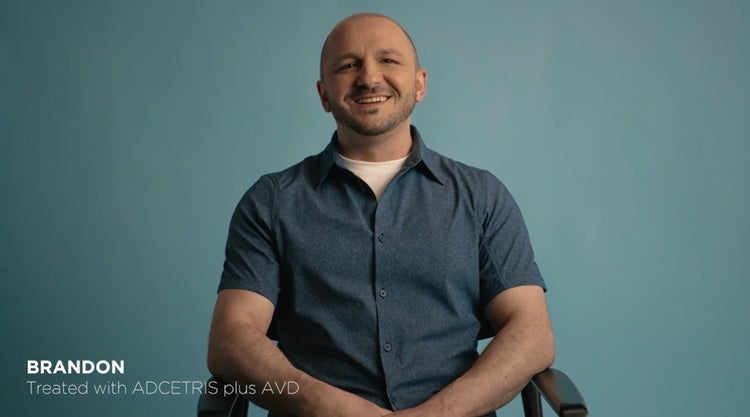
When I was diagnosed with stage 4 classical Hodgkin lymphoma, my big expectation was to obviously get better. I knew that my first treatment choice could be my best chance at beating my Hodgkin lymphoma, so making the right treatment choice for me really mattered. I knew I found a great oncologist who understood me, so I wanted to decide on a treatment and get started as soon as possible. My doctor gave me two choices, ADCETRIS plus AVD or ABVD. He took his time explaining them to me, and I was never pressured to take either treatment. He told me that with ADCETRIS plus AVD, ADCETRIS takes the place of bleomycin in the ABVD chemotherapy regimen. But that it works differently than chemotherapy alone. It made me question, what does different mean? How does it work differently? He explained that traditional chemotherapy kills the fast-growing cells, and ADCETRIS is an antibody drug conjugate that has the ability to target CD30, which are found on the surface of classical Hodgkin lymphoma cells. I'm not a scientist, but I like the targeted nature of ADCETRIS, and that it worked differently in the body to treat classical Hodgkin lymphoma. My doctor explained that ADCETRIS plus AVD was approved by the FDA to treat stage 3 or 4 classical Hodgkin lymphoma.
This was good to hear. I wasn't looking for options that were experimental or to participate in a clinical trial. I really like the idea of being treated with something that was FDA approved, more targeted than traditional chemotherapy, and had long term clinical data and established results. I began researching the ECHELON-1 study and learned that ADCETRIS plus AVD reduced the risk of cancer growing or spreading, receiving additional anti-cancer therapy or death by 23% when compared to ABVD. These results really mattered to me. I learned later that ADCETRIS plus AVD reduced the risk of death by 41% compared to traditional ABVD chemotherapy after approximately six years of follow-up, which means that ADCETRIS plus AVD has a higher overall survival than ABVD. These long-term results are also important in my opinion and makes me even more confident in my decision. Treatment effectiveness was definitely the most important factor to me personally. I wanted to choose a treatment that was shown to work and would increase my chances of survival. My doctor and I also talked about the potential risk of treatment. All of the ADCETRIS side effects, especially ones that could be serious or have a lasting impact.
He said that the most common side effect for ADCETRIS was nerve damage called peripheral neuropathy, which mostly involved numbness or tingling in the hands or feet and/or weakness in the arms or legs. Doing my own research, trusting my body, and choosing the right doctor set me up for a successful treatment plan. After thoroughly reading and reviewing all I could, I chose ADCETRIS. I liked how it worked differently than chemotherapy alone and is designed to target specific cells.
Brandon was treated with ADCETRIS (brentuximab vedotin) plus AVD (Adriamycin, vinblastine, and dacarbazine).
ADCETRIS plus AVD is a prescription therapy approved for adults with previously untreated stage 3 or 4 classical Hodgkin lymphoma.
ADCETRIS will not work for everyone. Individual results may vary. The information provided is for educational purposes only and is not intended to replace discussions with a health care provider. Ask your doctor if ADCETRIS plus AVD is right for you.
Continue watching to review the Important Safety Information and read Important Facts, including BOXED WARNING at www.ADCETRIS.com.
Important Safety Information
- What is the most important serious safety information I should know about ADCETRIS?
- Progressive Multifocal Leukoencephalopathy (PML): Patients treated with ADCETRIS can have a rare, serious brain infection, called PML that can lead to death. Tell your doctor immediately if you have mood or behavior changes, confusion, problems in thinking or loss of memory, changes in vision, speech or walking, or decreased strength or weakness on one side of the body. PML may also be caused by prior treatments or diseases that weakened your immune system.
- Do not take ADCETRIS if you are receiving bleomycin.
What are the other possible serious side effects of ADCETRIS?
- Nerve damage (peripheral neuropathy). Tell your doctor if you have any numbness or tingling in your hands or feet or any muscle weakness.
- Allergic and infusion reactions. Tell your doctor if you experience symptoms of fever, chills, rash, or breathing problems within 24 hours of infusion. If you have a reaction, you may be given medicines before your ADCETRIS treatment.
- Blood problems. Serious cases, including death, of fever with a low number of white blood cells, have occurred with ADCETRIS. Serious cases of a low number of white blood cells, a low number of platelets, or a low number of red blood cells can occur. Your doctor will do blood tests to check your blood cell levels during ADCETRIS treatment. Your doctor may give you a medicine called G-CSF. Tell your doctor if you have a fever of 100.5 degrees Fahrenheit or higher, chills, cough, or pain when you urinate.
- Infections caused by bacteria, fungi, or viruses have been reported.
- Tumor lysis syndrome is caused by the fast breakdown of cancer cells. Your doctor will monitor you for symptoms.
- Patients with severe kidney disease or moderate or severe liver disease may have more side effects and deaths than patients without kidney or liver problems.
- Liver problems. Serious liver problems, including death, can occur. Tell your doctor if you feel tired, do not feel like eating, have upper stomach pain, dark urine, or yellow skin and eyes (jaundice).
- Lung problems. Serious lung problems, including death, can occur. Tell your doctor If you have a new cough, a cough that gets worse or feel out of breath.
- Skin problems called Stevens-Johnson syndrome and toxic epidermal necrolysis can happen. Tell your doctor if you have rash, hives, sores in your mouth or blistering or peeling skin.
- Gastrointestinal (GI) problems. Serious cases, including death, related to the pancreas, stomach, intestine, and colon, can happen. If you have lymphoma that involves your stomach or intestine, you could have a higher risk of GI problems. Tell your doctor if you have severe stomach pain, chills, fever, nausea, vomiting, or diarrhea.
- High blood sugar. Your doctor will test your blood during ADCETRIS treatment. Tell your doctor if you need to urinate more often than usual, are very thirsty, or have blurry vision.
The most common side effects (greater than or equal to 20%) in adult patients who received ADCETRIS are:
- nerve damage (peripheral neuropathy)
- nausea
- feeling tired
- muscle pain
- constipation
- diarrhea
- vomiting
- fever
- infection in the nose or sinuses
- sores or swelling in the mouth and/or in the digestive tract
- upper stomach pain
- rash
The most common laboratory abnormalities (greater than or equal to 20%) in adult patients who received ADCETRIS are:
- a decrease in white blood cells
- an increase in creatinine
- a decrease in hemoglobin
- an increase in blood sugars
- an increase in alanine aminotransferase (ALT)
- an increase in aspartate aminotransferase (AST)
The most common severe side effects (greater than or equal to 5%) in pediatric patients who received ADCETRIS are:
- a low number with white blood cells
- a low number of red blood cells
- a low number of platelets
- fever with a low number of white blood cells
- sores or swelling in the mouth
- infection
These are not all the possible side effects of ADCETRIS. Tell your doctor about any side effect that bothers you or does not go away. If you have certain side effects, your doctor may lower your dose, delay, or stop your ADCETRIS treatment.
What should I tell my doctor before I start treatment with ADCETRIS?
- All your medical conditions, including if you have kidney, liver, or lung problems, an infection, or diabetes.
- If you are pregnant or plan to become pregnant. ADCETRIS may harm your unborn baby. Females who are able to become pregnant: your doctor should give you a pregnancy test before starting ADCETRIS treatment. You should use effective birth control during ADCETRIS treatment and for two months after your last dose of ADCETRIS. Tell your doctor right away if you become pregnant or think you are pregnant during ADCETRIS treatment.
- Men with female partners who can get pregnant should use effective birth control during ADCETRIS treatment and for four months after the last dose.
- If you are breastfeeding or plan to breastfeed. Do not breastfeed during ADCETRIS treatment.
- All the medicines you take, including prescription and over-the-counter medicines, vitamins, and herbal supplements. ADCETRIS and certain other medicines can affect each other.
You are encouraged to report negative side effects of prescription drugs to the FDA. Visit www. fda.gov/Safety/MedWatch or call 1-800 FDA-1088.
Please see important facts about ADCETRIS, including BOXED WARNING.
Video Transcript
My family was my strongest support system throughout my cancer journey. It was easy to ask them for help when I needed it. We're a close-knit family. My mom is the leader of the pack and keeps us all close together. My mom's probably each of our number one cheerleaders, support. She's just always there for you. My sister and brother-in-law took the time to drive and wait while I received my treatments. These were long days, but never once did they complain. My dad was also there to fill in when needed. They really pushed me every week to get out of the house, to do things, stay active, and not get depressed or mope around. They bought a house right after I got diagnosed in May. So I was like, well, we want you to come over and build rocking chairs, or we want you to do light stuff in a sense, around the house that I could do to remain active and still feel included. She made sure that I had everything I needed as well to feel good about myself. I really feel that without them, I might have fell into the “poor me” or feeling sorry for myself. And with them around, I just didn't have time to do that or had no desire to ever feel bad for myself.
Tradition. You ring the bell on your last chemo. I knew my last chemo was July 12th. So whoever's with you, nurses, doctors, anybody that's in the area, they come in, “I'll celebrate with you.” There's actually a song that they sing to you or you recite back. The nurse sang it, so I'm glad I didn't have to sing it. We all wore my “make this shot look easy” shirt. So I got one for every single person in the family, and we all had our matching shirts on for the bell. The cancer journey gave me a different outlook on life. I'm grateful for my journey and my experience. I honestly believe I was really blessed by this experience. I understand not everybody has the same outcome or situation, but for me, this experience changed me for the better. I would say if you have you have stage 3 or 4 Hodgkin lymphoma, the most important thing you could do is really research, look into your options, discuss the treatment plans with your doctor, and ultimately do what feels right for yourself.
Do not give in or do not settle for something that may not be the best for you. I'd also say, for my perspective, that positive mindset is really one of the most important things. Being there for yourself and making sure that you're taken care of is important. If I didn't change doctors, I don't know what would have happened. I'm happy that I chose ADCETRIS plus AVD, and I'm so grateful to my doctors, care team, and family who supported me throughout.
Brandon was treated with ADCETRIS (brentuximab vedotin) plus AVD (Adriamycin, vinblastine, and dacarbazine).
ADCETRIS plus AVD is a prescription therapy approved for adults with previously untreated stage 3 or 4 classical Hodgkin lymphoma.
ADCETRIS will not work for everyone. Individual results may vary. The information provided is for educational purposes only and is not intended to replace discussions with a health care provider. Ask your doctor if ADCETRIS plus AVD is right for you.
Continue watching to review the Important Safety Information and read Important Facts, including BOXED WARNING at www.ADCETRIS.com.
Important Safety Information
- What is the most important serious safety information I should know about ADCETRIS?
- Progressive Multifocal Leukoencephalopathy (PML): Patients treated with ADCETRIS can have a rare, serious brain infection, called PML that can lead to death. Tell your doctor immediately if you have mood or behavior changes, confusion, problems in thinking or loss of memory, changes in vision, speech or walking, or decreased strength or weakness on one side of the body. PML may also be caused by prior treatments or diseases that weakened your immune system.
- Do not take ADCETRIS if you are receiving bleomycin.
What are the other possible serious side effects of ADCETRIS?
- Nerve damage (peripheral neuropathy). Tell your doctor if you have any numbness or tingling in your hands or feet or any muscle weakness.
- Allergic and infusion reactions. Tell your doctor if you experience symptoms of fever, chills, rash, or breathing problems within 24 hours of infusion. If you have a reaction, you may be given medicines before your ADCETRIS treatment.
- Blood problems. Serious cases, including death, of fever with a low number of white blood cells, have occurred with ADCETRIS. Serious cases of a low number of white blood cells, a low number of platelets, or a low number of red blood cells can occur. Your doctor will do blood tests to check your blood cell levels during ADCETRIS treatment. Your doctor may give you a medicine called G-CSF. Tell your doctor if you have a fever of 100.5 degrees Fahrenheit or higher, chills, cough, or pain when you urinate.
- Infections caused by bacteria, fungi, or viruses have been reported.
- Tumor lysis syndrome is caused by the fast breakdown of cancer cells. Your doctor will monitor you for symptoms.
- Patients with severe kidney disease or moderate or severe liver disease may have more side effects and deaths than patients without kidney or liver problems.
- Liver problems. Serious liver problems, including death, can occur. Tell your doctor if you feel tired, do not feel like eating, have upper stomach pain, dark urine, or yellow skin and eyes (jaundice).
- Lung problems. Serious lung problems, including death, can occur. Tell your doctor If you have a new cough, a cough that gets worse or feel out of breath.
- Skin problems called Stevens-Johnson syndrome and toxic epidermal necrolysis can happen. Tell your doctor if you have rash, hives, sores in your mouth or blistering or peeling skin.
- Gastrointestinal (GI) problems. Serious cases, including death, related to the pancreas, stomach, intestine, and colon, can happen. If you have lymphoma that involves your stomach or intestine, you could have a higher risk of GI problems. Tell your doctor if you have severe stomach pain, chills, fever, nausea, vomiting, or diarrhea.
- High blood sugar. Your doctor will test your blood during ADCETRIS treatment. Tell your doctor if you need to urinate more often than usual, are very thirsty, or have blurry vision.
The most common side effects (greater than or equal to 20%) in adult patients who received ADCETRIS are:
- nerve damage (peripheral neuropathy)
- nausea
- feeling tired
- muscle pain
- constipation
- diarrhea
- vomiting
- fever
- infection in the nose or sinuses
- sores or swelling in the mouth and/or in the digestive tract
- upper stomach pain
- rash
The most common laboratory abnormalities (greater than or equal to 20%) in adult patients who received ADCETRIS are:
- a decrease in white blood cells
- an increase in creatinine
- a decrease in hemoglobin
- an increase in blood sugars
- an increase in alanine aminotransferase (ALT)
- an increase in aspartate aminotransferase (AST)
The most common severe side effects (greater than or equal to 5%) in pediatric patients who received ADCETRIS are:
- a low number with white blood cells
- a low number of red blood cells
- a low number of platelets
- fever with a low number of white blood cells
- sores or swelling in the mouth
- infection
These are not all the possible side effects of ADCETRIS. Tell your doctor about any side effect that bothers you or does not go away. If you have certain side effects, your doctor may lower your dose, delay, or stop your ADCETRIS treatment.
What should I tell my doctor before I start treatment with ADCETRIS?
- All your medical conditions, including if you have kidney, liver, or lung problems, an infection, or diabetes.
- If you are pregnant or plan to become pregnant. ADCETRIS may harm your unborn baby. Females who are able to become pregnant: your doctor should give you a pregnancy test before starting ADCETRIS treatment. You should use effective birth control during ADCETRIS treatment and for two months after your last dose of ADCETRIS. Tell your doctor right away if you become pregnant or think you are pregnant during ADCETRIS treatment.
- Men with female partners who can get pregnant should use effective birth control during ADCETRIS treatment and for four months after the last dose.
- If you are breastfeeding or plan to breastfeed. Do not breastfeed during ADCETRIS treatment.
- All the medicines you take, including prescription and over-the-counter medicines, vitamins, and herbal supplements. ADCETRIS and certain other medicines can affect each other.
You are encouraged to report negative side effects of prescription drugs to the FDA. Visit www. fda.gov/Safety/MedWatch or call 1-800 FDA-1088.
Please see important facts about ADCETRIS, including BOXED WARNING.
More ADCETRIS stories


Mary Ann’s Story: Being informed matters


Amina’s story: Speaking up matters